Older homes and newer homes alike can benefit from upgrades that do more than add novelty. The most worthwhile smart improvements make the house easier to control, cheaper to run, and more comfortable to live in from morning to night. When an upgrade improves efficiency, safety, convenience, and resale appeal at the same time, it usually delivers much more value than a flashy device that solves a problem nobody actually has. A good investment year starts with choices that strengthen daily life.
Smart home planning also works better when you look beyond gadgets and think about the house as one connected system. Climate control, lighting, water use, access points, flooring, bathrooms, and roofing all affect how smoothly the property functions. If one area is lagging behind, even the best app-based feature can feel underwhelming in practice. Real improvement comes from pairing technology with physical upgrades that support it.
Start With The Systems That Control Daily Comfort
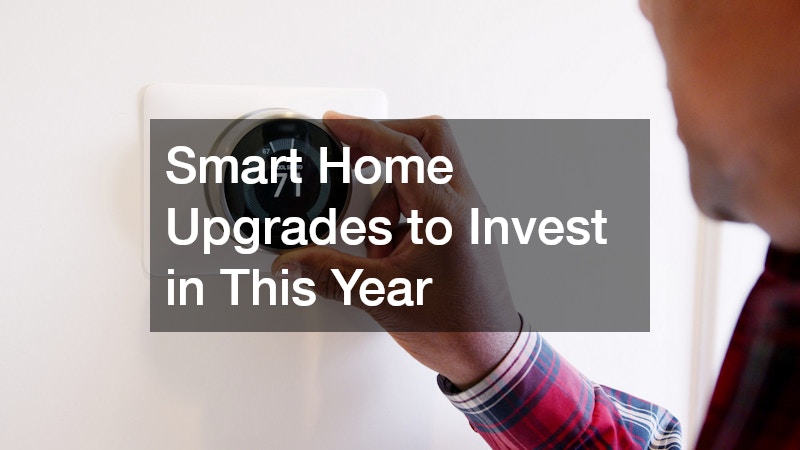
One of the smartest places to begin is with heating and cooling control. A knowledgeable HVAC contractor can help you evaluate whether a smart thermostat, zoning adjustment, duct improvement, or system replacement will give you the best return based on how your home actually performs. Many homeowners assume the thermostat is the only issue, even when uneven airflow or aging equipment is doing most of the damage. A better diagnosis leads to a smarter investment.
Temperature control also becomes more useful when it reflects how people really move through the house. Rooms that sit empty during work hours do not need to be treated the same way as family rooms, bedrooms, or offices that stay occupied for long stretches. Scheduling, room-specific comfort targets, and better sensor placement can trim waste without making the home feel restrictive. Convenience matters more when efficiency happens quietly in the background.
Cooling upgrades deserve special attention in any year when utility costs and summer heat are major concerns. An AC installation service can make sense when the existing system struggles to keep temperatures stable, runs too loudly, or forces the household to tolerate hot spots that never fully improve. Smart control features become much more effective when they are paired with equipment that can respond predictably to changing conditions. Good technology works best when the mechanical side can keep up.
Electrical capacity plays a big role in whether smart upgrades actually feel seamless once they are installed. A local electrical contractor can help determine if the panel, wiring paths, outlets, and switch locations are ready for added automation, new lighting plans, and expanded charging needs. Many owners want the convenience of connected devices without first confirming that the house can support them reliably. Strong infrastructure makes the rest of the system easier to trust.
Lighting control is often one of the first smart features people notice every day. In many homes, residential electricans are involved when homeowners want dimmers, occupancy-based lighting, updated switch banks, or better exterior illumination that can be scheduled and managed more precisely. Small changes in how lighting is controlled can make the home feel more secure, more energy-aware, and much easier to navigate at night. Daily-use upgrades tend to justify themselves faster than novelty purchases.
Add Water And Bath Upgrades That Improve Routine Use
Water management is another smart investment area because hidden leaks and outdated fixtures can quietly raise bills and create avoidable damage. A reliable plumbing company can help assess whether smart shutoff devices, leak sensors, pressure-related fixes, or fixture upgrades make the most sense for your layout and plumbing age. Catching problems early is one of the clearest examples of technology saving money instead of simply adding convenience. Prevention has real value when water is involved.
Bathrooms are also strong candidates for practical modernization because they are used constantly and often show wear quickly. Better ventilation, easier-to-clean surfaces, improved storage, and more accessible layouts can change how the whole home feels without requiring a full expansion. When a space handles moisture and daily traffic more efficiently, it usually stays cleaner and more comfortable with less effort. That is a smart result even before any resale discussion begins.
A shower conversion can be one of the most useful upgrades in a home with an outdated tub setup, limited accessibility, or a bathroom that feels harder to maintain than it should. The change can make daily routines faster, improve visual openness, and create an opportunity to add better lighting, niche storage, and more water-conscious fixtures at the same time. For many households, the value comes from a better fit with how the room is actually used now. An upgrade that matches current habits tends to age well.
Floors deserve more attention in smart home planning because surface condition affects comfort, cleaning time, acoustics, and how cohesive the entire house feels. A quality flooring service can help homeowners choose materials that work better with pets, kids, traffic flow, radiant heating, moisture-prone areas, or integrated cleaning devices such as robotic vacuums. The smartest flooring choice is often the one that reduces future maintenance while also improving appearance. Practical durability should not be treated as separate from design.
Smart bathroom and flooring plans often overlap with electrical decisions in older properties. In those cases, residential electricans may need to address outlet placement, vent connections, lighting changes, or code-related updates when a homeowner wants a more connected and functional washroom or hallway. That kind of coordination can prevent a project from being delayed by small but important technical gaps. The smoother the sequencing, the easier it is to stay on budget.
Improve Entry, Access, And First-Impression Features
Garage access is one of the most overlooked parts of smart home planning, even though many households use it as a primary entry point. Reputable garage door companies now offer features that support quieter operation, app-based monitoring, delivery coordination, lighting control, and better security awareness throughout the day. Those benefits are especially useful for families with variable schedules or homes where the garage is connected directly to the main living space. A smarter entry system can improve daily flow more than people expect.
Entry upgrades also matter because convenience feels most valuable at transition points. Coming home after dark, leaving during bad weather, or checking whether the garage was closed after a rushed morning all become easier when the system is dependable and visible from a phone or control panel. Households tend to notice these improvements immediately because they reduce low-level friction that repeats every single day. Simple certainty is a genuine comfort feature.
For some homes, garage opener repairs can also be a smart investment trigger, not just a maintenance task. If the opener is unreliable, loud, slow to respond, or incompatible with newer controls, fixing those issues may be the step that makes remote access and monitoring worthwhile in the first place. Technology feels far less impressive when the hardware underneath it is inconsistent. Performance has to come before convenience.
Selection matters just as much as repair timing. Comparing garage door companies based on insulation options, control integration, support quality, and product fit can lead to a system that does more than open and close on command. A thoughtful purchase can improve curb appeal, noise control, security, and energy performance at the same time. Strong results usually come from matching the product to the household’s routines instead of buying based on appearance alone.
Exterior performance also influences whether indoor smart features deliver their full value. Input from local roofing contractors can help homeowners evaluate ventilation, roof condition, drainage behavior, and material wear that may be affecting attic heat, moisture management, or overall energy efficiency. A connected thermostat cannot fully compensate for a roof system that is allowing avoidable strain on the rest of the home. Smart planning works better when the envelope supports the technology inside it.
Tie Efficiency Upgrades To Long-Term Planning
It is also worth thinking about smart upgrades as part of a yearly improvement roadmap instead of a one-month shopping list. An HVAC contractor can be especially useful during that planning stage because heating and cooling decisions often affect electrical work, insulation priorities, and how other upgrades should be sequenced. Good planning reduces the chance that one project will need to be reopened later because a more important system was addressed out of order. Timing protects value.
Water-related technology belongs in long-range planning for the same reason. A plumbing company can help homeowners decide whether to prioritize leak detection, fixture replacement, pressure adjustments, filtration support, or appliance-related safeguards based on the age and performance of the home’s existing system. Choosing the right sequence often matters more than buying the most advanced device first. A controlled plan usually feels smarter than a scattered upgrade list.
Homes with several connected features also benefit from a broader control strategy. Centralized apps, clear user permissions, backup manual functions, and realistic automation rules can keep the house feeling intuitive instead of overcomplicated. Too many disconnected systems can make even expensive upgrades feel clumsy if every feature requires a separate workaround. A smart home should reduce effort, not create a new administrative burden.
As the list of connected devices grows, power planning becomes more important. A local electrical contractor can help homeowners think through surge protection, dedicated circuits, panel room, smart switch compatibility, and future expansion so today’s upgrade decisions do not box them in later. That is especially important when the household expects to add more lighting scenes, security devices, charging stations, or automated controls over time. Flexibility is part of the investment.
Cooling strategy can also belong in long-range budgeting rather than only in emergency replacement decisions. An AC installation service may be worth discussing before the current unit fails if rising repair frequency, uneven cooling, and energy waste are already making the system a weak point in the home’s overall comfort plan. Proactive decisions often create better product choices and less stressful scheduling. Replacement feels much smarter when it happens on your timeline.
Finish With Upgrades That Make The Home Feel Complete
Surface changes often determine whether a smart home feels polished or pieced together. A well-chosen flooring service can help bring visual consistency to spaces that now include updated lighting, thermostats, sensors, and remodeled fixtures, which makes the home feel intentional instead of partially modernized. Better flooring can also support quieter rooms, easier cleaning, and a smoother experience for households that use robotic cleaning tools or spend a lot of time barefoot at home. Those quality-of-life gains are easy to appreciate.
Bathrooms are another place where finishing choices strongly affect the perception of the whole upgrade year. A shower conversion can reinforce the idea that smart improvements are supposed to make life easier, not just add things to control from a screen. When the bathroom becomes more accessible, easier to clean, and better lit, the space supports comfort in a very direct way. Practical ease is one of the clearest forms of luxury.
Older garages often need one more layer of attention before they truly function like a modern access point. In some houses, garage opener repairs may be the missing step that allows a household to trust the system during travel, package deliveries, school pickups, and late arrivals when reliability matters most. Once the opener responds consistently, the rest of the connected features become much more useful. Smart control depends on dependable basics.
The best smart home upgrades are the ones that solve real problems while making the property easier to manage, more comfortable to live in, and better prepared for the next round of improvements. When climate control, water protection, electrical readiness, access systems, surfaces, and exterior performance are upgraded with a clear plan, the house becomes more useful in ways people actually feel every day. Good investments do not just add features. They create a home that runs with less friction and more confidence.
About the Author