
Major life events have a way of turning your home into a reflection of everything that just changed. Whether you are downsizing after a divorce, merging two households after a marriage, or clearing out a loved one’s belongings after a loss, the physical clutter can feel just as overwhelming as the emotional side of the transition. Getting organized is not just about tidiness; it is about creating a space that supports you through whatever comes next. This guide walks through practical steps for reorganizing your home and handling the paperwork and decisions that often accompany these turning points.
Recognizing When a Life Event Demands a Home Reset

Certain milestones almost always require a full reassessment of how your home is arranged and used. A new baby, a remarriage, a job relocation, or the death of a family member each bring different physical and emotional demands on your living space. In the case of a loss, even practical tasks like arranging a headstone can occupy the same mental space as sorting through a loved one’s belongings at home. Recognizing early that your current setup no longer fits your life makes the reorganization process feel intentional rather than reactive.
- A death in the family often means absorbing furniture, documents, and keepsakes
- Divorce or separation typically requires dividing shared belongings and reworking room functions
- Marriage or blending households means merging duplicate items and negotiating space
- Long-term illness or disability may require converting rooms for accessibility
- Downsizing for retirement often means letting go of decades of accumulated items
Sorting Belongings After a Death in the Family
Clearing out a loved one’s home is one of the most emotionally taxing organizing projects a person can face. It helps to set a realistic timeline instead of trying to sort everything in one exhausting weekend, since grief tends to slow down even simple decisions. Many families give themselves several weeks or even a few months, especially if there’s no urgent deadline like a lease ending, a house sale pending, or final arrangements such as choosing a gravestone or cemetery marker.
While sorting through a home, you will likely encounter paperwork related to a funeral home or cremation services, insurance policies, and property deeds that need to be kept for legal or financial reasons. Setting these documents aside in a labeled folder early in the process prevents them from getting lost among items destined for donation or disposal. Consider using separate folders or envelopes for categories like “Final Expenses,” “Insurance,” “Property,” and “Bank Accounts” so nothing gets mixed up when you sit down to handle each task later.
It also gives you a head start if you later need to track down account numbers, statements, or receipts while settling outstanding bills. Common documents worth pulling aside include death certificates, life insurance policies, mortgage or lease agreements, vehicle titles, tax returns from the past three years, and any outstanding medical bills. Keep in mind that you may need multiple certified copies of the death certificate, since banks, insurers, and government agencies each typically require an original rather than a photocopy.
If you’re unsure whether something matters, err on the side of keeping it until an executor, attorney, or accountant has reviewed it. Small items like a checkbook, a safe deposit box key, or a folder of loose receipts can easily be mistaken for clutter, but they sometimes hold clues to accounts or assets that still need to be closed or transferred. Taking photos of documents as you find them can also serve as a helpful backup in case the originals are misplaced during the larger sorting process.
- Sort items into keep, donate, sell, and discard piles, using a fifth “undecided” box for anything you can’t decide on yet
- Photograph sentimental items you cannot keep, noting the story behind each one in a caption or journal
- Keep legal and financial paperwork together in one secure, labeled folder, including the will, deeds, insurance policies, and account statements
- Ask other family members before discarding shared belongings, and consider a group walkthrough so everyone can claim items in person
- Set aside high-value or unclear items, like jewelry or collectibles, for appraisal before selling or donating
- Take breaks and pace the process over several weeks or months, tackling one room or category at a time
- Enlist a trusted friend for support on harder days, since they can offer perspective without the emotional weight
Handling Memorial Arrangements Without Losing Household Order
In the middle of grief, families are often making decisions about services and remembrances at the same time they are trying to keep the household running. Choosing between burial and cremation services, arranging a funeral flower service, and coordinating with family members about who will handle which task can pull attention away from everyday home management. Creating a simple checklist or shared calendar helps keep track of appointments, deliveries, and deadlines during this period.
It also helps to designate one area of the home, such as a kitchen counter or home office corner, as a temporary command center for anything related to arrangements. Keeping receipts, contracts, and contact information for those handling cremation services or the funeral flower service in one place reduces the mental load of searching for details later. This small step of physical organization can make an emotionally heavy time feel slightly more manageable.
- Use one binder or folder for all memorial-related paperwork
- Keep a shared family calendar for service dates and visitor schedules
- Store contact information for vendors in one accessible spot
- Set reminders for any follow-up payments or deliveries
Reworking Room Functions After Divorce or Separation
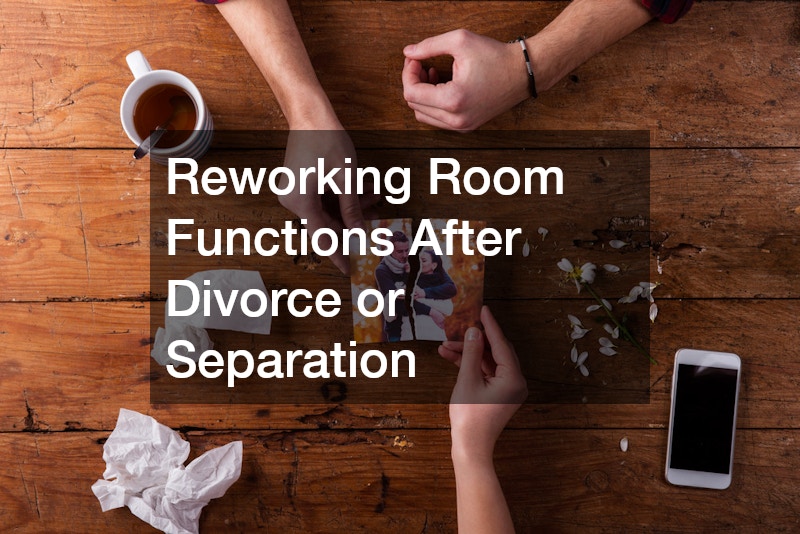
When a household splits, rooms that once served one purpose often need to be reimagined for a smaller family unit. A home office might become a bedroom, or a playroom might need to shrink to fit new space constraints. Approaching this as a fresh start rather than a loss can make the physical changes feel more empowering.
Dividing shared property is often one of the more complicated parts of this transition, and many people find it useful to consult family lawyers before making final decisions about furniture, appliances, or the home itself. Having clarity on legal ownership before you start rearranging prevents the frustration of moving items twice. Once agreements are settled, focus on creating rooms that reflect your current life rather than lingering reminders of the past.
- List which items are shared versus individually owned before dividing
- Repurpose empty rooms based on your new daily routine
- Update mailing addresses and household accounts promptly
- Consider donating furniture that no longer fits your space or needs
Merging Two Households Into One Functional Home
Combining homes after a marriage or new partnership brings its own organizational puzzle, since two people rarely own identical sets of furniture, kitchen tools, or storage systems. Start by identifying duplicate items and deciding together which versions to keep based on condition, sentimental value, or practicality. This process works best as a collaborative decision rather than one person taking over the entire layout.
Storage tends to be the biggest challenge when merging households, so it helps to audit closets, cabinets, and garages before bringing in a single new item. Clearing out duplicates first creates room to breathe and prevents the new home from feeling cramped from day one. Setting shared systems, like a joint mail station or unified filing cabinet, helps both partners adjust to the new arrangement smoothly.
- Compare duplicate kitchen items and keep only the best of each
- Create shared storage zones for linens, tools, and seasonal items
- Set up one system for bills and important documents
- Donate or sell items that no longer serve the combined household
Adapting Your Home for a New Family Member
Whether you are welcoming a newborn, an aging parent, or a returning adult child, adding a person to the household changes how every room functions. Nurseries, in-law suites, or converted guest rooms all require rethinking storage, furniture placement, and traffic flow through the home. Each scenario also comes with its own practical demands: a newborn needs a changing station and easy nighttime access to the kitchen, an aging parent may need a bedroom near a full bathroom with no stairs in between, and an adult child moving back home often needs a defined private space to preserve everyone’s independence.
Start by mapping out what the new occupant will actually need day-to-day, then work backward to the room’s layout. This might mean relocating a home office to free up a bedroom, adding closed storage to hide medical supplies or baby gear, or widening a walkway to accommodate a wheelchair or walker. Small measurements matter here — a doorway narrower than 32 inches, for example, can make a big difference for future mobility needs even if it isn’t an issue on day one.
Planning these changes, rather than scrambling after the person arrives, reduces stress for everyone involved. Give yourself at least four to six weeks of lead time when possible, so you can address furniture orders, minor repairs, or professional help without last-minute pressure. A brief family conversation about shared spaces, noise, and privacy expectations before the move can also prevent friction once the new arrangement is in place.
- Map out which rooms need to shift purpose before the new arrival, whether that’s converting a home office into a nursery or freeing up a bedroom for an aging parent
- Prioritize safety features if children or elderly family members are moving in, such as outlet covers, cabinet locks, grab bars, and non-slip flooring
- Set up flexible storage that can adjust as needs change, using modular shelving or bins that scale from baby gear to toddler toys to teenage belongings
- Keep pathways clear for mobility aids if applicable, allowing at least 36 inches of clearance for wheelchairs or walkers
- Consult a professional organizer or accessibility specialist if the transition involves significant structural or long-term care needs
Downsizing a Home for Retirement or Relocation

Retirement often brings the decision to move into a smaller home, and the process of downsizing can feel daunting after decades of accumulating belongings. Breaking the project into categories, such as furniture, clothing, kitchenware, and sentimental items, makes the task less overwhelming than trying to tackle the entire house at once. Give yourself permission to let go of items that no longer serve your lifestyle, even if they carried meaning at one point.
This is also a common time for families to consolidate estate planning documents, which may involve visiting a family law firm to update wills or property titles before or after the move, and sometimes even arranging cemetery plots or tombstones for aging relatives. Handling these legal details alongside the physical downsizing keeps both processes organized and reduces the chance of overlooked paperwork. Many people find it helpful to finalize legal matters first, since it can influence which items get passed on to family members versus sold or donated.
- Sort belongings by category rather than room to see the full picture
- Measure your new space before deciding what furniture to keep
- Digitize photos and documents to save physical space
- Pass down sentimental items to family members who want them
Coordinating Renovations Tied to Major Life Changes
Sometimes a life event requires physical changes to the home itself, such as adding a ramp for accessibility, converting a garage into a living space, or removing a wall to open up a floor plan for a growing family. These projects often involve more than a typical do-it-yourself weekend, and larger jobs may require bringing in a crane service to move heavy materials, appliances, or structural components safely. Planning renovations around your life event timeline, rather than rushing them, helps avoid costly mistakes.
Before starting any major renovation, get a clear estimate of both cost and time so you can plan the rest of your household organization around the disruption. Setting up a temporary living arrangement for affected rooms, such as a makeshift kitchen or storage area, keeps daily life functional during the work. Communicating clearly with contractors about your timeline needs, especially if tied to a move-in date or family event, keeps the project on track.
- Get multiple quotes before committing to a renovation project
- Ask contractors about realistic timelines and potential delays
- Set up temporary living spaces for rooms under construction
- Keep valuables and important documents away from work zones
Building a Long-Term Organization System for Your Home
Once the immediate chaos of a life event settles, it is worth investing in an organization system that can flex with future changes. Label makers, clear storage bins, and a simple filing system for household documents make it easier to maintain order going forward. Revisiting your system every six months or so ensures it continues to match how your household actually lives, rather than how it was originally set up.
- Schedule a seasonal decluttering session to prevent buildup
- Keep a master document folder for legal and financial paperwork
- Label storage bins clearly so items are easy to find later
- Reassess your system after any future life change
Major life events will always bring some disruption to your home, but a thoughtful, room-by-room approach can turn that disruption into a fresh start. Focus on one category or space at a time, keep important documents organized as you go, and do not hesitate to bring in outside help, whether that is a contractor, an organizer, or a legal professional, when the project calls for it. Your home does not need to be perfect right away; it simply needs to move forward with you as your life changes.
About the Author